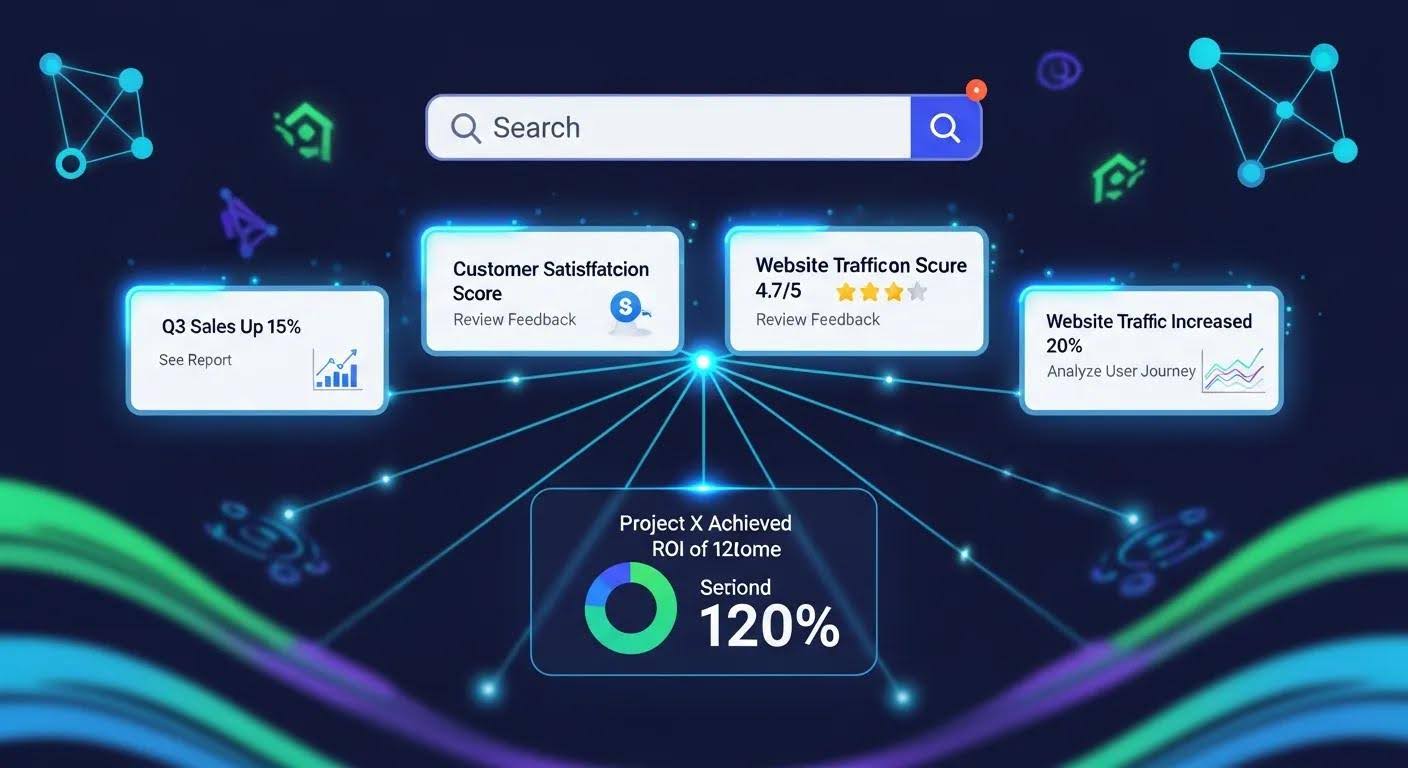
Turn AI-Powered Search into Business Growth
AI-driven search is reshaping how people find answers online. Our Answer Engine Optimization (AEO) services help brands earn placement inside Google’s AI overviews by aligning content with how models read, summarize, and cite the web. Below we outline how AEO works, why it matters alongside traditional SEO, the business outcomes it delivers, and practical steps to reshape content so AI systems surface your answers more often. This guide gives clear, actionable guidance so your site can compete in an AI-first search landscape.
What is Answer Engine Optimization and why it matters for AI visibility
Answer Engine Optimization (AEO) is a focused content strategy that makes pages easy for AI systems—like Google’s models—to interpret and reuse in short, trustworthy summaries. Instead of only chasing keyword rankings, AEO emphasizes clear structure, explicit entity signals, and direct answers so models can confidently reference your content. For organizations that depend on discoverability, AEO increases the chance AI will surface your content as the quick, authoritative answer users see first.
How AEO differs from traditional SEO when capturing Google AI overviews
AEO and traditional SEO share the goal of visibility, but they optimize different signals. Traditional SEO focuses on backlinks, keywords, and ranking mechanics. AEO formats content so AI models can detect intent, entities, and relationships—think semantic structure, schema, and plain-language answers. When executed well, AEO improves the likelihood your content appears in AI-generated snippets, summaries, and recommendation panels—helping click-throughs and building user trust.
To understand the shift, it helps to review the core methods behind conventional search optimization.
Search Engine Optimization: Methods for Online Visibility
ABSTRACT: As information technology evolves, search engine optimization (SEO) remains central to improving content visibility and relevance. This review covers methods and techniques that boost search performance with a focus on relevance, speed, and user experience. It includes case studies and practical examples demonstrating optimization in practice, and considers how cloud platforms like Microsoft Azure support scalable SEO infrastructure. The findings underscore optimization’s role in delivering higher-quality results and meeting rising user expectations.
Search Engine Performance Optimization: Methods and Techniques, 2024
What practical benefits does AEO deliver for businesses seeking AI recommendations?
For businesses, AEO delivers three clear advantages. First, it improves visibility inside AI-driven results so your content shows up at decision points. Second, concise, AI-friendly answers can boost conversions by supplying reliable, actionable information that leads to clicks or direct actions. Third, being cited by AI strengthens brand authority—positioning your organization as a trusted source in search-driven conversations. Together, these outcomes help brands compete where discovery is increasingly mediated by AI.
How Google AI Overviews and the Search Generative Experience affect visibility
Google AI Overviews and the broader Search Generative Experience (SGE) change how users discover answers: they deliver concise summaries and recommendations inside search results, which can reduce visits to individual pages. That shift makes it critical for businesses to format content so AI can find, understand, and cite it—otherwise visibility and referral traffic can drop even when demand remains strong.
What role do AI overviews play in modern search behavior and zero-click results?
AI overviews compress the path from question to answer. More users now expect instant, summarized responses, creating more zero-click interactions where the search result itself satisfies the query. By structuring pages for AI—clear answers, marked facts, and short summaries—companies raise their odds of being the source behind those quick responses, capturing attention and credibility even without a direct visit.
How does SGE shape how AI models recommend brands?
SGE uses models that weigh relevance, authority, and user signals when recommending brands. Brands that present structured, accurate information and strong topical signals are more likely to be recommended. Understanding SGE helps you prioritize the content elements AI values—so your brand aligns with user intent and appears as a recommended option in generative search outputs.
Key strategies to optimize content for Google AI Overviews and generated answers
Effective AEO focuses on three practical pillars: semantic structure, consistent structured data, and a sharp emphasis on user intent. Combine clear headings, direct answers, schema markup, and explicit entity references so AI systems can parse and reuse your content reliably. That mix increases both the chance of being quoted in AI overviews and the quality of referral traffic you receive.
How semantic structuring and entity mapping improve AI comprehension?
Semantic structuring organizes content so models quickly find the main idea, supporting points, and factual details. Use explicit headings, short paragraphs, lists, and labeled data. Entity mapping connects names, concepts, and relationships—linking product names to features, pricing, and use cases—so AI grasps context. Together these tactics make pages easier for AI to summarize accurately and confidently.
Why structured data matters for AI search optimization
Structured data (schema) gives AI explicit signals about what a page contains—products, reviews, how-to steps, events, and more. Applying the right schema types helps search systems interpret context and surface richer results like snippets or knowledge cards. That clarity increases the chances your content is chosen for AI overviews and other enhanced search experiences.
How AEO services use models like ChatGPT and Gemini
AEO teams use modern language models—ChatGPT, Gemini, and similar systems—to test phrasing, simulate conversational queries, and refine answerable content. These models help draft concise summaries, surface common question patterns, and validate how content reads as a snippet or chat reply. The goal is to align human-written content with the way AI constructs answers.
Recent work confirms the practical role AI tools play in speeding content production and quality control for SEO-focused workflows.
AI-Powered Content Creation for SEO Optimization
This study describes an AI-driven web application built on OpenAI’s ChatGPT that automates parts of content creation to meet demand for high-quality, SEO-ready material. The platform reduces time and cost with topic categorization, customizable prompts, and exports to Word, PDF, and Markdown, plus seamless WordPress publishing—showing how AI can scale content workflows while keeping editorial oversight.
Optimizing Content Production Cycles with AI Technology
Techniques used to influence AI chatbot recommendations in your favor
Techniques include writing brief, direct answers to frequent queries, mirroring natural user phrasing, and reinforcing authority with citations and schema. By studying conversational queries and tailoring content to those patterns, brands increase the likelihood AI chatbots will surface their pages as recommended responses.
How NLP supports conversational query optimization
Natural Language Processing (NLP) helps match content to how people actually speak and ask questions. Applying NLP principles—synonyms, intent classification, and conversational phrasing—makes content discoverable for spoken and typed queries, boosting the chance it appears in AI-generated responses and voice or chat experiences.
How to measure and monitor success in capturing Google AI overviews
Measuring AEO success mixes traditional metrics with new signals. Track visibility indicators that suggest AI citations and engagement, then combine those with standard performance data so you can assess both exposure and business impact. Repeatable measurement lets you iterate on content and prove ROI.
KPIs that show effective AI overview visibility and brand mentions
Useful KPIs include impressions across search and discovery surfaces, click-through rates from AI-driven snippets, shifts in branded queries, and how often your brand is mentioned in AI summaries. Combine these with engagement and conversion metrics to see whether AI visibility translates into real business results.
Tools and processes to track AI-driven search performance
Use analytics (Search Console, GA4), SEO platforms that track SERP features, and specialist monitoring for AI citations and knowledge panels. Regular audits, query sampling, and controlled tests reveal where AI references your content and which pages perform best in generative results.
What specialized AEO services add in competitive markets
Specialized AEO services blend technical SEO, content strategy, and machine-learning-aware methods to build a defensible presence in AI-driven search. In competitive markets, that specialization speeds discovery, cuts wasted effort, and focuses resources on the signals AI systems actually use when recommending content.
How an AI-first approach keeps businesses competitive
An AI-first approach prioritizes the signals and formats AI favors today—structured answers, clear entities, and concise summaries—so brands preserve visibility as search behavior shifts. That proactive stance reduces the risk of falling referrals and positions companies to seize new opportunities in generative search.
Why expertise with AI signals matters for maximizing recommendations
Expertise matters because AI recommendation systems depend on subtle signals: accurate schema, semantic clarity, and authoritative linking. Experienced teams know how to surface those signals consistently, using data-driven testing to refine content until it reliably appears in AI overviews. That skill is a practical advantage in an increasingly automated discovery landscape.
To learn how specialized AEO can help your organization, feel free to contact us directly. We’ll assess your needs and recommend the highest-impact steps.
For a focused conversation about your AI optimization opportunities, you can book a call with one of our experts today.
Frequently Asked Questions
What types of businesses can benefit from Answer Engine Optimization?
AEO helps a wide range of organizations that depend on online discovery. E-commerce sites, service providers, publishers, and any content-driven business can improve discoverability in AI-driven search by optimizing for clarity, structure, and authority. In competitive sectors, AEO is often a differentiator that boosts visibility and conversions.
How does AEO affect local search visibility?
AEO boosts local visibility by making business information and location signals easier for AI to find and cite. Optimizing pages with local keywords, accurate schema, and clear entity data increases the chances your business is recommended in geographically relevant AI summaries—especially valuable for service-based and retail businesses serving nearby customers.
Can AEO be combined with existing SEO efforts?
Yes. AEO complements traditional SEO by adding structure and intent-driven signals that AI models use. While backlinks and keyword work remain important, integrating AEO—schema, concise answers, and semantic organization—creates a more complete strategy that targets both conventional rankings and AI-driven discovery.
How important is content quality for AEO?
Content quality is essential. Well-researched, clearly written, and user-focused content is more likely to be recognized and cited by AI systems. Direct answers, factual accuracy, and consistent tone build trust and authority—key factors when models choose which sources to recommend.
How often should content be updated for AEO?
Regular updates matter. Review and refresh priority pages at least quarterly, and more frequently for topics that change fast. Fresh content, updated data, and current examples signal relevance to AI systems and help maintain or improve visibility over time.
What tools help implement AEO effectively?
Combine analytics (Search Console, GA4) with SEO platforms that track SERP features and structured-data testing tools. Use query analysis and content-testing workflows to spot opportunities for AI citations. This tool mix lets you monitor performance and iterate on AEO tactics efficiently.
How can businesses implement structured data for AEO?
Start by identifying the most relevant schema types (Article, Product, Event, FAQ) and apply them consistently to priority pages. Validate markup with Google’s structured data testing tools, focus on high-intent pages, and schedule periodic checks so schema stays accurate as content changes.
Why is user intent central to AEO?
User intent determines the format AI will favor. Separate informational, transactional, and navigational intents and craft content that answers each directly—short summaries for quick queries, and deeper resources where users are researching decisions.
How can social media support AEO?
Social channels amplify distribution and surface trending questions that inform AEO. Share concise answers linked to authoritative pages, join topic conversations to strengthen signals, and use social insights to adjust content to what people are asking now.
What role does content freshness play in AEO?
Fresh content signals relevance. Regular updates, timely posts, and clear date stamps help AI prefer your pages for topics that need current information. Maintain a content calendar and prioritize updates for pages that drive discovery and conversions.
How can analytics refine AEO strategies?
Use analytics to spot queries and pages gaining impressions, identify which snippets drive clicks, and measure how AI visibility ties to conversions. Run experiments—change formats, add schema, tweak headings—and measure the results so AEO improves from data, not guesswork.
What challenges come with implementing AEO?
Common challenges include keeping up with evolving AI signals, handling the technical work of structured data, and scaling high-quality content. Overcome these by training teams, partnering with specialists, and building repeatable editorial and validation workflows.
Conclusion
Answer Engine Optimization helps businesses stay visible as search becomes more generative and AI-driven. By prioritizing structured content, concise answers, and user intent, organizations increase the likelihood AI systems will cite their work—boosting visibility, trust, and conversions. When you’re ready to adapt your content strategy for AI-first search, our team can help prioritize the steps that deliver the most impact.
